Showing posts with label warehouse management. Show all posts

Saturday, July 2, 2011

How Do You Conduct Your Cycle Count?

One of the reasons you conduct Cycle Count is to check the accuracy of the inventory records versus the actual inventory.

Variances could mean wrong issuance i.e. the customer order was for a potato chip cheese flavor but what was issued and eventually delivered was barbecue flavor. This results in Lost Sales as the customer would reject the Barbecue flavor as Cheese flavor sells more.

courtesy of system-ideas.com
An even more significant reason for conducting cycle counts as it could hide pilferages in the warehouse.

But sometimes, the cycle count is not done in a proper fashion as in the following:

1.  It is better to conduct cycle counts in a surprise or unannounced manner to preclude any cover-up of shortages;

2.  A Cycle count team should be composed of one Accounting (or non-warehouse personnel) and one warehouse personnel and both should count independent of the other to preclude one copying the results of the other.

Both Cycle count members can count different portions of the warehouse simultaneously;

3.  All SKUs must be subject to a cycle count preferably on a monthly basis. Hence, the Cycle count team is a permanent one i.e after the finish counting the last SKU, they then start counting the first SKU.

This method I gathered from the Logistics manager of a Philippine Supermarket chain wherein all 35,000 SKUs in their Distribution Center is counted continuously.

4.  After the Cycle count has been done, determination of the variances and disposition of said variances must be done immediately to avoid any cover-up of shortages and to correct the computer records so that no errors in invoicing will occur.


By the way, I would like to invite you to visit my Sulit Homepage as there are some business opportunities that you guys might be able to help me out with.  If you are interested, just click the Sulit Logo below:

My Sulit Homepage


Friday, June 17, 2011

The Death of the Corporate Logistics Manager. . . . Would You Ever Outsource Your Own Job If It Was Good for the Company?

I attended a talk by Mr. Jomar Hilario, Filipino Internet Marketer.  One of the ideas that struck me was his use of Virtual Assistants in the Philippines to do his internet marketing.  He claims there is no Employer-Employee Relationship (hence, no need to pay employee benefits such as social security and medical insurance) and in fact, he has not met in person some of his virtual assistants. It is cheaper to use his Virtual Assistants though he claims also to pay them about the going-rate for wages as engagement is for a minimum of 30-days.

Do I lay-off myself? (courtesy of The Office)
So, I was thinking, if I was a Logistics manager running a 300-man  warehouse facility, would I dare to recommend to my bosses to outsource me as it will be cheaper for the company?  Would I be committed to the mental asylum for thinking that way?

If I get Outsourced, can I apply with DHL?  (courtesy of DHL)
I had a talk with my friend who works with DHL Supply Chain and I asked him how can it be cheaper for a company to outsource a warehouse facility to DHL considering that he will have to pay the same wage rates a company would pay plus DHL's profit markup?

He said while at the outset there may not be savings but in the long run DHL can prove that thru Operational Efficiency, the client-company will realize savings over the long term.

If that were true, then is it the death of the corporate logistics manager?

By the way, I would like to invite you to visit my Sulit Homepage as there are some business opportunities that you guys might be able to help me out with.  If you are interested, just click the Sulit Logo below:

My Sulit Homepage

Wednesday, June 8, 2011

The Best Time to Lose Your Assets is at Night When Your Logistic Managers are Never Around!!

Ask yourself these questions:

Watching the Time courtesy of zvuvisisrael.blogspot.com
1.  Do you check if your Logistics Head  in charge of your 1,000-sqm Warehouse  or the Operations Manager of your 3-hectare National Distribution Center is an 8am-5pm man or a 24/7-On Call type of Line Manager?

2.  Is your Logistics top honcho a Hands-on Manager or does he practice Management by Remote Control (meaning he just about delegates every critical function that he is responsible for)?

An Ops Man should FIND WAYS courtesy of cvresumesamples.com
3.  Can your Operations Manager or Supply Chain Head do the work of every  keyman in his Warehouse Team (excepting manual labor and driving a tractor trailer)?

I have seen Warehouse supervisors who cannot do the job of their Checkers because they are not familiar with the company's SKUs, proper procedure in stripping container vans with imported goods,  how to receive goods such as pasta that are fumigated while in-transit and other warehouse SOPs.

In the case of the fumigated vans, had the inexperienced Operations manager simply opened the fumigated van he could have put everybody's life in the immediate vicinity of the van doors in fatal condition.

If he opened a container van loaded with imported cotton bales without the presence of the appointed surveyor, he would have put into serious jeopardy any chance of his company making an Insurance Claim against the supplier.

4.  Does your Logistics Head command the respect of his Warehouse Team or do they look at him with disdain?  Can he rally the troops effectively at a time when the company needs its Christmas deliveries out ASAP?

All I know about being an Operations Manager I learned from a BOOK courtesy of informit.com & Microsoft
5.  Is your Operations Manager imaginative enough to think of innovative or avantgarde ways to solve a logistic problem or does he solely rely on standard procedures and technology ? Is his knowledge of Running a Logistics Facility solely from and by the BOOK or does he STREET-SMART Experience?


By the way, I would like to invite you to visit my Sulit Homepage as there are some business opportunities that you guys might be able to help me out with.  If you are interested, just click the Sulit Logo below:

My Sulit Homepage


Tuesday, June 7, 2011

What is Worse than Shoplifters???. . . . Employee and Managerial Theft!!!

I sometimes notice a Retail Store erect superb defenses against Theft from external elements.  They may employ the following:

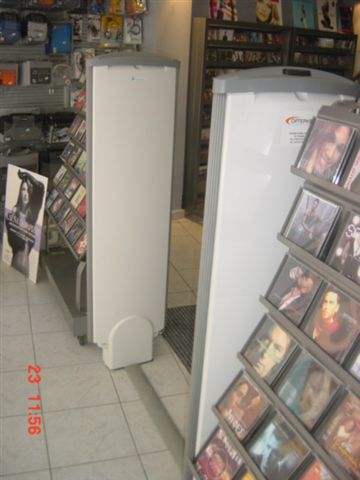
Sensormatic courtesy of optephsis.gr
1.  Sensormatics (those twin electronic posts guarding Store entrances and will sound an alarm whenever an unpaid item leaves the premises);

2.  Plainclothes security guards mixing in with the customers;

3.  Oval mirrors at both ends of an aisle and at every aisle;

4.  CCTV cameras in various shapes and sizes.

But while it is good, do you know sometimes theft by your own Management and employees could be higher in value and incidence without your knowing it?  Some are funny because they call it by different names:  Shrinkage, Unreconciled stock balances/adjustments and what have you.

Rather than try to prevent or run after the culprit, they manage the loss thru statistics.  Meaning, if shrinkage is only 1% of total sales, it is within tolerable allowances (like the accounting term Allowance for Bad Debts).
security guards courtesy of cartoonstock.com

CCTV security camera courtesy of firetown.com
Sometimes Management would rather "turn a blind eye" rather than risk a confrontation with a long-tenure manager or fight with the union steward, in case the company is unionized.
 
 How does Logistics fit in all these, you may ask?  A lot because Logistics can be used as the best tool for your Security and Executive Management in monitoring malfeasance by your own employees, to wit:

1.  A well-laid out stockroom or warehouse floor set-up will make any SKU (stock-keeping unit or distinct inventory item) stand-out if something is wrong (a carton of expensive wine or spare parts is missing);

2.  A Cycle Count Program supplemented with Surprise Inventory Count will spot inventory variances and keep your warehouse personnel on their toes;

3.  A well-defined Supply Chain Structure with proper documentation provides a means to ensure compliance in securing the company's assets;

Supply Chain Flowchart courtesy of bondlogistics.com.my
4.  A  LogisticWarehouse Management System or a less-expensive simple Inventory program will force everybody to always reconcile with the stock balances per computer database;

5.  Even something as simple as a Pallet Height/Pallet Stacking Standard per pallet per SKU will alert an auditor if anything is not right;

6.  Supply Chain Performance Measures applied to Inventory assets and to warehouse personnel evaluation will spot problems early.

Well-laid out Warehouse courtesy of inventoryandsoftware.com
7.  Adoption of RFID or the more familiar Bar Code readers to document every movement of every SKU will make it difficult to hide discrepancies.

8.  In the end, all these technology will be for nothing if we do not make sure we hire right Logistic personnel to handle our Assets.

By the way, I would like to invite you to visit my Sulit Homepage as there are some business opportunities that you guys might be able to help me out with.  If you are interested, just click the Sulit Logo below:

My Sulit Homepage

Friday, June 3, 2011

A Logistics Problem is Not Always as Simple As It Looks!

Problem ---  The Company had to variants of their best-selling products but there were instances of mis-delivery by their Delivery Crew wherein the flavors were interchanged between customers.

Effect --- Customer rejection. Product damage due to Double-handling as the goods had to be returned to the warehouse and putaway again.

Backgrounder --- There was a need to review the manner stocks were loaded onto the truck & delivered to the  as there were no discrepancies in the stocks issued by warehouse to them.  One thing was determined is that for ease in Picking of stocks, the Delivery Summary (Picklist to other companies) is arranged according to SKUs (and not by customers) and arranged in a pallet. The stocks on the pallet are then loaded onto the truck by the helper in random fashion.  Since each truck would have about 30 to 40 customers (drop-points), there is a high probability of mix-up as the delivery crew is in a rush to finish all delivery in one day.

Immediate Proposal --- Prepare 2 Delivery Summaries -- First one for use by the warehouse is where the stocks to be picked are sorted by SKUs and the second one to be given to the delivery helper/driver is the stocks sorted by customers.  Instead of loading by SKUs onto the truck, the driver determines the delivery route and loads the stocks according to the customers ie last drop is loaded first and the first drop is loaded last.

My Investigation --- Loading by customers will not help prevent mix-ups in delivery as the problem is not the manner in which the stocks are loaded but rather the VISUAL APPEARANCE OF THE PACKAGING OF THE TWO VARIANTS WHICH IS PRONE TO MIX-UP, to wit:

1.  To save on Packaging Inventory costs, the Company decided to use the same carton printing for all the variants of their Potato snack (to allow interchangeablilty) and the only thing to distinguish them is a rubber stamp at the bottom of the face of the carton side indicating the flavor;

2.  The rubber stamped Flavor appears only on two sides of the box which means that if the box was loaded onto the truck lengthwise vis-a-vis the truck's rear cargo doors, the helper cannot tell which flavor is which carton;

The SKu code appears prominently on top. Nestle Cerelac show Sku codes with a Red or Yellow background color depending on the flavor (courtesy of Nestle Vevey SA)
3.  The SKU codes do not appear on the carton itself and neither do the SKUs appear on the Invoice or Delivery Summary thereby preventing any means of double-checking what was unloaded at the customer;

4.  If you look at the Nestle product, the SKU code appears in Big Fonts and the background of the Sku Code is in different bright colors like Red or Yellow;

5.  In other products, the Text printed is similar to maintain Brand awareness but the Text color is totally different (not similar colors) like purple and red;

6.  The size (S, M, L, XL, XXL) of a certain product appears in Huge Fonts to appear prominently;

7.  The idea is to make it as easy for the delivery helper to distinguish between different SKUs even if he cannot read. Also, people who did not have the benefit of a good education can still distinguish numerals and that is why it is important to have the SKU Code Numbers appear prominently and in color.

REMEMBER:  AT THE DELIVERY POINT, IN THE EYES OF YOUR CUSTOMER, THE DELIVERY HELPER IS REPRESENTING YOUR COMPANY.!!!  WHY NOT MAKE IT EASY FOR HIM???

By the way, I would like to invite you to visit my Sulit Homepage as there are some business opportunities that you guys might be able to help me out with.  If you are interested, just click the Sulit Logo below:

My Sulit Homepage

Saturday, May 28, 2011

Warehouse Management: The Bad Thing About Emails.

As a then newly-installed Operations Manager for a 3.2-hectare 4-Building National Distribution Center Facility east of Manila, I always made it a point to make a Quick tour of the whole facility before I step inside my Office.  The action is in the Warehouse floor and that is where I want to be.

Screenshot courtesy of Yahoo Mail
First building is in what they call the Consolidation Warehouse where Inbound goods from different suppliers including the plantation/cannery in Mindanao where the bulk of the goods come from are first off-loaded from 20-footer container vans and 10-wheeler trucks.

I saw my forklift operators unload the container van of loaded pallets.  I saw my checkers checking quantities and items versus the packing list and checking for damages to the goods. I heard my warehouseman barking commands on where in the warehouse to store the pallets.  I then saw my warehouse helpers laying down the pallets and with the use of pallet jacks, pull the stocks inside.  In fact, I saw everybody in the warehouse except my warehouse supervisor who heads the warehouse--- he was nowhere in the area!!

After an hour making my rounds, I finally stepped into the Office and found my warehouse supervisor in front of the computer answering emails!!!  I asked him why was he not in the warehouse floor and he said he will get into trouble if he does not answer the emails sent by our client-company (that's our principal, the one who pays us)!!! Second question, how long will it take him to answer the emails --- the better part of the morning, on most days!!! Terrific.  I just lost the use of a warehouse supervisor.  I told him starting tomorrow, I want to see him at the warehouse floor. (EMAIL EVIL NUMBER 1)

EMAIL EVIL NUMBER 2:  I noticed when we get an email from our client-company, they furnish copies (it's that "cc:" thing you see after the first line of Yahoo mail) to everybody including several recipients in my team including me as the Head of the facility.  And this is the bombastic thing, each of those recipients will now reply to the sender and of course, "cc:" me. Its a BACTERIA THAT REPLICATES GEOMETRICALLY!!!!
I now hold several copies of the same text of the original email plus several copies too of the replies of everybody!!!!  (hey, too many exclamation points)

Hah!!!! The client-company pays my warehouse supervisor P30,000/month give or take just to answer emails half of the time.  Is that cost-effective?

 
By the way, I would like to invite you to visit my Sulit Homepage as there are some business opportunities that you guys might be able to help me out with.  If you are interested, just click the Sulit Logo below:

My Sulit Homepage

WAREHOUSE MANAGEMENT: Does Expansion Always Mean an Increase in Manpower Headcount?

Involve your Crew in Planning (courtesy of google.ph)
As I always advice my clients, always look at what you have and see what is its True Capacity and if one is using that True Capacity in an efficient way.

Take for example the manpower in a typical Warehouse.  Normally, the reasoning would go like this:  If my warehouse crew of 5  can handle 1,000 cases a day of Outbound shipment, then a ten-fold increase in Outbound volume could mean one will need about 45 more people.  Not always true as one should consider the following:

1.  DETERMINE WHERE YOU ARE COMING FROM.  Is the existing crew of 5 operating at their maximum, or can they handle some more volume?  How much more without losing accuracy  in picking stocks for delivery & delays in loading of trucks?

2.  To minimize Peak Warehouse Workloads at any one time, schedule the receiving of Inbound goods at a time when there is a slack in the warehouse i.e the time between the loaded trucks have just left and the time when they have to prepare for next day's delivery.  ( Your supplier will always agree to your requested Delivery Time as he wants to sell to you!)

pallet jack image courtes of google.ph
3.  Do the existing warehouse crew have enough Material Handling equipment such as pallet jacks, forklifts and other handling aids or do they have to share thereby increasing waiting times?  (It is better to have an excess of Material Handling equipment than an excess of manpower.  During lean months, the former does not cost anything more but extra men cost money whether you use them or not and it is not easy to reduce them without risking labor problems.)

4.  Review the whole warehouse process from Receiving, Putaway, Picking, Issuing, Replenishment and Loading and implement WORK SIMPLIFICATION and minimize redundant work steps.

flowchart courtesy of google.com.ph
5.  Whenever possible, AUTOMATE.  I do not mean you buy an SAP P35-Million WMS (Warehouse Management System) software but you may have to invest in a simple Inventory Program that allows bar-coding.

             Aside from being more accurate and tamper-proof, a simple Inventory Program (maybe P30,000 ot P50,000 or US$1,000) and bar-coding will make the process of Receiving, Putaway, Replenishment, Issuing etc a lot faster by freeing the Human-Intervention part of the process (the slowest in any Workflow). 

barcode scanner courtesy of consumerschoicepos.com
Ex In Receiving goods, the warehouseman and checker individually have to go around the pallet and look for the product description on the upended carton, compare that to the supplier's invoice & put a tick mark (vs scanning the barcode in less than a second)

barcode by mperfect.net
4.  When you add manpower, this is what happens:

        4.1 You increase the complexity in supervising so many people.  You may now need Warehouse super-
                   visors to break-up management;

        4.2  You can lose the Team Spirit and Camaraderie as now parts of your Staff may feel alienated as
                   of course, you cannot talk personally talk to everybody daily;

        4.3  Your instructions used to reach your crew immediately but now it has to cascade to a few levels
                  and misinterpretations do happen.

5.   The most neglected step when planning for a warehouse expansion is to involve your warehouse crew (or the involved parties), to wit:

        5.1  Advice them of management's plan, the timeline of implementation and what exactly is the impact
                 or what does it mean to them;

       5.2  Tell them in clear and concise terms the problems that will result from the expansion but you do not
                have to present it to them in a threatening or negative way.  You can call the expansion an
                Excellent development for everyone and problems are Key Result Areas to ensure success;

      5.3  Lastly, ask your warehouse for suggestions and for good suggestions, include them in your plans &
               be sincere in giving credit to your Warehouse crew.

Involve your whole Supply Chain courtesy of google.com.ph
6. Involve all parties in your SUPPLY CHAIN including your suppliers.  For suppliers, you could:

      6.1  Schedule shipments to your warehouse during slack periods (as mentioned above)

      6.2  Minimize Final Packing on your end.  (Preferably goods arrive in your place ready for delivery to
               your customers. No Repacking, no  stickering for promo events, attaching of price tags, no bundling
               at your end etc)

      6.3 For your bulk customers, arrange for your supplier to delivery directly to your customers using
              your Sales Invoice (saves handling cost and avoid double-handling)
I am sure you could easily add to the List .  It is only when you have exhausted all the above that you may really have to add men but only just what you really need.

By the way, I would like to invite you to visit my Sulit Homepage as there are some business opportunities that you guys might be able to help me out with.  If you are interested, just click the Sulit Logo below:


My Sulit Homepage