I sometimes notice a Retail Store erect superb defenses against Theft from external elements. They may employ the following:
1. Sensormatics (those twin electronic posts guarding Store entrances and will sound an alarm whenever an unpaid item leaves the premises);
2. Plainclothes security guards mixing in with the customers;
3. Oval mirrors at both ends of an aisle and at every aisle;
4. CCTV cameras in various shapes and sizes.
But while it is good, do you know sometimes theft by your own Management and employees could be higher in value and incidence without your knowing it? Some are funny because they call it by different names: Shrinkage, Unreconciled stock balances/adjustments and what have you.
Rather than try to prevent or run after the culprit, they manage the loss thru statistics. Meaning, if shrinkage is only 1% of total sales, it is within tolerable allowances (like the accounting term Allowance for Bad Debts).
Sometimes Management would rather "turn a blind eye" rather than risk a confrontation with a long-tenure manager or fight with the union steward, in case the company is unionized.
How does Logistics fit in all these, you may ask? A lot because Logistics can be used as the best tool for your Security and Executive Management in monitoring malfeasance by your own employees, to wit:
1. A well-laid out stockroom or warehouse floor set-up will make any SKU (stock-keeping unit or distinct inventory item) stand-out if something is wrong (a carton of expensive wine or spare parts is missing);
2. A Cycle Count Program supplemented with Surprise Inventory Count will spot inventory variances and keep your warehouse personnel on their toes;
3. A well-defined Supply Chain Structure with proper documentation provides a means to ensure compliance in securing the company's assets;
4. A LogisticWarehouse Management System or a less-expensive simple Inventory program will force everybody to always reconcile with the stock balances per computer database;
5. Even something as simple as a Pallet Height/Pallet Stacking Standard per pallet per SKU will alert an auditor if anything is not right;
6. Supply Chain Performance Measures applied to Inventory assets and to warehouse personnel evaluation will spot problems early.
7. Adoption of RFID or the more familiar Bar Code readers to document every movement of every SKU will make it difficult to hide discrepancies.
8. In the end, all these technology will be for nothing if we do not make sure we hire right Logistic personnel to handle our Assets.
By the way, I would like to invite you to visit my Sulit Homepage as there are some business opportunities that you guys might be able to help me out with. If you are interested, just click the Sulit Logo below:

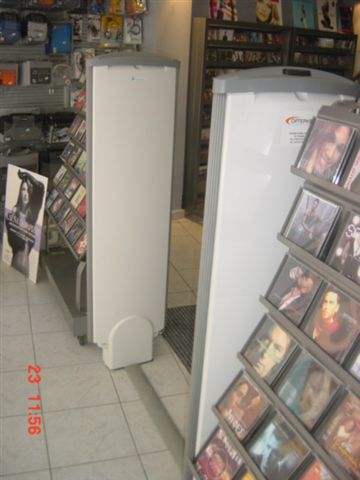 |
| Sensormatic courtesy of optephsis.gr |
2. Plainclothes security guards mixing in with the customers;
3. Oval mirrors at both ends of an aisle and at every aisle;
4. CCTV cameras in various shapes and sizes.
But while it is good, do you know sometimes theft by your own Management and employees could be higher in value and incidence without your knowing it? Some are funny because they call it by different names: Shrinkage, Unreconciled stock balances/adjustments and what have you.
Rather than try to prevent or run after the culprit, they manage the loss thru statistics. Meaning, if shrinkage is only 1% of total sales, it is within tolerable allowances (like the accounting term Allowance for Bad Debts).
 |
| security guards courtesy of cartoonstock.com |
 |
| CCTV security camera courtesy of firetown.com |
How does Logistics fit in all these, you may ask? A lot because Logistics can be used as the best tool for your Security and Executive Management in monitoring malfeasance by your own employees, to wit:
1. A well-laid out stockroom or warehouse floor set-up will make any SKU (stock-keeping unit or distinct inventory item) stand-out if something is wrong (a carton of expensive wine or spare parts is missing);
2. A Cycle Count Program supplemented with Surprise Inventory Count will spot inventory variances and keep your warehouse personnel on their toes;
3. A well-defined Supply Chain Structure with proper documentation provides a means to ensure compliance in securing the company's assets;
 |
| Supply Chain Flowchart courtesy of bondlogistics.com.my |
5. Even something as simple as a Pallet Height/Pallet Stacking Standard per pallet per SKU will alert an auditor if anything is not right;
6. Supply Chain Performance Measures applied to Inventory assets and to warehouse personnel evaluation will spot problems early.
 |
| Well-laid out Warehouse courtesy of inventoryandsoftware.com |
8. In the end, all these technology will be for nothing if we do not make sure we hire right Logistic personnel to handle our Assets.
By the way, I would like to invite you to visit my Sulit Homepage as there are some business opportunities that you guys might be able to help me out with. If you are interested, just click the Sulit Logo below:

